Episode Transcript
[00:00:30] Speaker A: Hey everyone, I want to welcome you to a Common Word in the Islamic Mary podcast. So I want to first begin by welcoming Rita George Tavert Kovic to the podcast. Thanks so much, Rita, for joining us.
[00:00:43] Speaker B: I'm glad to be here with you.
[00:00:46] Speaker A: So Rita has been a longtime friend and also even a mentor of mine. She's written a lot on Christian Muslim relations, especially on the Islamic Mary or Maryam. And today we're going to dive into some of her research as well as her institutional roles. So, Rita, why don't you start telling us about yourself, in particular your spiritual biography. How did you get interested in Christian Muslim relations?
[00:01:14] Speaker B: Yeah, well, as an undergraduate I studied anthropology.
And so my junior year I went with a professor to do archaeology in Jordan, and I was entranced with the call to prayer.
And I also had Muslim friends at the same time.
So even though I was studying the social sciences as a Catholic, I became increasingly interested in Islam as a beautiful religion.
And so that was sort of my beginning of interest in Catholic Muslim relationship.
Then later on I had a job at the Office for Ecumenical and Interreligious affairs in the Archdiocese of Chicago. And I had that job working on Christian Muslim relations when 911 happened. And so my job for a few years after that was to work with the Muslims I already knew in Chicago to try to combat some of the post 911 fears.
So, you know, my interest is both personal, professional, and then of course, eventually also scholarly.
[00:02:24] Speaker A: Oh, wow, that's fascinating. And 911 has come up previously in the podcast Rachel Mikva. She mentions also after 9 11, she felt a symbolism and also a synergy with Muslim communities and wanted to help speak on their behalf. So yeah. So thanks so much for sharing that.
Let's go now to speak about your role in your various institutions. So you are someone that's not just a scholar, but you are also a professor. You play roles in community and larger institutions. So you are at Benedictine University and you are the chair of the theology department.
And as we discussed before, it's a fascinating university in a sense that 25% of the population are Muslims. So can you speak about the university as a whole, your role there and then the Muslim student population?
[00:03:13] Speaker B: Sure.
So Benedictine University is in the suburbs of Chicago and it's a Catholic institution, small institution, local commuter school in many respects. So there's become a tradition of the local Muslim students and their families feeling comfortable to send their kids to Benedictine as a safe space for faith and faith based discussions. And they can live at home and commute and so yeah, we have 25% Muslim student body. We also have lots of South Asians, so we have Hindus and Sikhs and Eastern Christians, different kinds of other Christians Protestants.
So it's a really diverse and special place. And so when I was hired, I was surprised and delighted that a person like me who's studies Christian Muslim relations could bring interreligious dialogue into any class. No matter what class you're teaching, it's de facto inter religious dialogue. So I've learned so much from my students. They've really influenced my teaching, my research and my thinking as well. So it's a really, really great place to be.
[00:04:23] Speaker A: Yeah. And I've seen that as well at Georgetown University. So I went to Georgetown and Georgetown was one of the first universities to hire a Muslim chaplain who is full time and develop Muslim life. So there is this fascinating connection, would you say, between Catholic Muslim dialogue and particularly Muslims going to Catholic universities of higher education. Would you say so?
[00:04:45] Speaker B: Absolutely. And I would say that there's a tradition of that, not just in higher education, but also in secondary schools. You know, for many years Muslim families would feel comfortable sending their daughters to all girls Catholic high schools. Right. So I think that tradition is constant in the United States. And I would also add that Muslims in the United States have looked to Catholic school systems as a model for their own Muslim school systems. Right. So Catholics 150 years ago, we're in the Muslim situation now. Right. We're immigrants in this land. We want to set up our own school systems. How do you do it? So I see some interesting connections there too.
[00:05:27] Speaker A: Absolutely. And I remember going at Georgetown, the idea of educating the whole person, not just a vocational education, but speaking to the spirit and your religious identity, I thought that was very motivating and inspiring.
All right, great. So now you also play multiple institutional roles. So you're a professor. But the last time we met and talked, you shared that you have this role in the Vatican and a specific role that focuses on interreligious studies, interfaith and specific, specifically Christian Muslim dialogue. So yeah, please share some, some thoughts about that.
[00:06:04] Speaker B: Sure.
So a few years ago I got a letter in the mail, in Latin from Pope Francis, appointing me as a consultor to the dicastery for interreligious dialogue. So it's an office at the Vatican, there's a pontiff, there's a council of bishops, and we are consultors to those bishops.
And so I wasn't sure what it would entail because the letter doesn't really tell you that, but it's entailed going to the Vatican a few times to meet with the bishops. It's involved, being involved in conferences.
And one of the most important for me has been being involved with a conference.
ALL Women's Conference. 13 religions around the world, women got together so kind of at the Vatican. For the Vatican, it was the first time to have all women's interreligious dialogue conference. And the women have kept up a network meeting every month by Zoom. We have a WhatsApp.
And so that has been a great experience for me. Who is interested in interreligious dialogue, is interested in women and interreligious dialogue.
And it's not actually my work at the Vatican is not specifically focused on Christian Muslim. It's the broader interreligious dialogue. But I would say the broader interreligious dialogue impacts Christian Muslim relations because we can never forget, we can't do bilateral dialogues in isolation. So if I'm a scholar of Catholic Muslim relations, I can't forget about Catholic Jewish relations. I can't forget about intra Christian relations in that. So I think this global network of dialogue reminds me of that.
And I am therefore doing both interreligious dialogue writ large and Christian Muslim dialogue at the same time.
[00:07:55] Speaker A: Okay, great. So this particular committee you're part of, does inter religious studies in general dialogue more broadly and does this have a focus on women or is it the.
[00:08:07] Speaker B: Dicastery for interreligious dialogue? And obviously all the bishops are men. So of the consultors, there's about 25 consultors around the world. I am only one of six women and only one of two, I would say, two women with who have children of school age.
So I bring a little intergenerational diversity as well. And the Vatican has been very proactive and the Pope himself in encouraging the leadership of women. So I'm excited to be part of that.
[00:08:41] Speaker A: Okay, wonderful. And as we'll discuss the Islamic Mary or Mary in general, she opens up these new doors about female spirituality and religious leadership. So, so great. So let's dive into your scholarship. And an important book is Christian Muslims and Mary that you've written. And a book that I've got opportunity to read. We were on a panel together that discussed it. And this book has been formative for me to think about Mary as a shared figure between Christians and Muslims. Earlier in my work, I focused a lot on Abraham and Abrahamic religions and how Abraham could be a bridge between the various traditions. But there's been a lot of new work on Mary and you've been A pioneer in that regard. So can you speak a little bit about that book? It's my argument, this general reception.
[00:09:38] Speaker B: So this book focuses on the history of the Christian use, mostly the Christian use of Mary as either a bridge or a barrier in Christian Muslim relations.
So it kind of takes you through, century by century, the ways in which Christians have either used her as a barrier. So, for example, thinking about her in the early modern period as Our lady of Victory against the Muslims, so she would be on the battle standards.
During the Spanish Conquista, she was painted after the 1590, sorry, 1571 Battle of Lepanto. There were paintings, there were plays honoring her as Our lady of Victory, and the use of the rosary as a spiritual weapon, specifically against the Ottoman Turks. And that has been a very powerful image. You could even kind of look up Our lady of Victory today on some websites and see. See that image employed today.
So we do have that history of her as a barrier, but then at the same time, we have Catholics seeing her as a bridge. So even in the medieval period, we have examples of Christians realizing, oh, Mary's in the Quran. Oh, we share these ideas.
But then the question is, though, bridge to what?
So I argue that in the history of Christian encounters with Muslims and Mary, Mary can be used either as a bridge to conversion or dialogue and friendship. So in the case of conversion, of course, in the Spanish Cantigas de Santa Maria, there's a song, cantiga, or story about how Mary, an image of Mary is appealing to a Muslim, and then it eventually lactates the miracle of the lactating icon, and Muslim falls down on his knees. And then, of course, the last scene is him getting baptized.
So, of course, the medieval Iberians saw her as a bridge to conversion, which actually continued until the 1950s, with Bishop Fulton Sheen having a chapter in his book about Mary as a bridge to conversion. But then in the 1950s, we see this interesting switch to the focus on Mary as a bridge to dialogue and friendship.
And, you know, largely thanks to the thinking of Louis Massignon, who also is the creator of the term Abrahamic faiths, of course, but he's also instrumental in his thinking about Mary as a bridge to dialogue and friendship. And even though he dies on October 31, 1962, which is right when the Vatican II Council started, so he wasn't there, but he was a professor of bishops and others who were there, including the people who wrote Nostra Aetate, like George Anawati, who's a Dominican. And so really, at Vatican ii, when we look At Nostra Aetate, Right. The section on Islam, we see very clearly that Mary, there's nothing in there about conversion. It talks about her as this shared figure.
[00:12:56] Speaker A: Yeah. And I really appreciated your book because of all the art, all the images, and I would encourage folks to pick that up, that it's very readable, very digestible, at the same time, very colorful. And I remember seeing that image that you mentioned about the lactating and the Muslim there and the baptism.
And also that point I really liked about your book was this bridge or barrier? Because a lot of times in interfaith studies and religious studies, we always focus on the bridge. But I really appreciate how you talk about the barrier as well, because both are there in our field.
All right, great. So let's now move to your recent article. So we both had the opportunity to participate in a conference and the proceedings are going to be published in the studies and dialogue. And you have this one article there called From Billboards to Mosques, Maryam, Do Muslims today call on Mary with devotion? So how does this article build up upon your book and what are you asking and delving into in that article?
[00:14:04] Speaker B: Yeah, so as I said, the book focuses on the ways that Christians have used Mary as a bridge or a barrier. But in the article it highlights ways in which I believe Muslims have recently used her, particularly as a bridge in sort of new form, what I would consider new forms of, quote, devotion. So a Muslim commissioning an icon, billboards on the way to o' Hare airport, mosques being renamed for Maryam, and Lebanon, the country declaring March 25th Annunciation Day as a national holiday, which Catholic countries don't do that anyway, so we can talk about some of those. But so I kind of argue that as a Catholic, some of these look like Muslims, quote, calling on her with devotion, which is a phrase from Nostra Aetate 3.
But of course, I had to follow that up with a question. Right, but, but do they, do they call her with devotion?
And really, so that's kind of the central question of the article because that's contested, you know, because Muslims will say, of course we don't. We don't call on anyone but God. We can't do that. Right. And so the question I consider is, you know, how is the Muslim tawassal, Right.
Similar to or different from Catholic intercession?
So that's the question that I ask in the book. And of course the question is really a truly shared question because it's an intra religious question. Right. So Muslims are asking themselves that question, what is it? And should we be doing it. And so do Christians. Right. Protestants and Catholics.
This is part of the Reformation. Protestants, like, we don't do that. You know, in some ways Protestants are very like, a lot like Muslims in that regard. We don't have mediators. Right, but yet some Muslims are Catholic and like, yes, we do. So that's the question that I was considering here in the article.
[00:16:18] Speaker A: Yeah, absolutely. And this article, you, you asked this question and could you speak a little bit more about that? So I remember reading in your book about Nosratate and there was this phrase about Muslims call on Mary with devotion. So what are the origins of that phrase and what did the authors mean by that before we maybe move into some examples of how Muslims are using Mary today?
[00:16:41] Speaker B: So, yeah, I mean, it's a great question.
So if you, if you look at the development of Nostra Etate 3, which I do in my book, the earlier stages of Nostra Aetate 3 was. And of course, as you know, Nostra Aetate was originally meant to just be deju days on the Jews, but some of the bishops said, no, we have to have something on Islam. So in any case, the earlier drafts of Nostra Aetate 3 is very bare bones.
And then when you see the acta from the conference or the council where all the bishops are talking, there are three bishops, Plumy from Cameroon, Sver from Syria, and Daskafi from Turkey, who explicitly mentioned shared shrines, the one in Turkey and other ones, and say, look, we have seen examples of Christians and Muslims sharing shrines, going to the same shrine. So we, again, it's the same thing that I see as a Catholic. It looks like what they're doing is calling on her with devotion. So we think that there needs to be a line about Mary in Nostra Aetate, but not only doctrine, but there is a doctrinal line where it says she's the Virgin mother of Jesus, but doctrine and something on practice.
So it's three bishops from the world that are saying, this needs to be in here. And it was, you know, ratified. So that's the origin of that phrase, the development of that phrase. And then so, but again, so for, for a Catholic asking the question of Muslims, right, Is it. What is this?
Right? You, you have to look at what this Muslim idea of Tawassil, right, Rooted in the Quran, 5, 35, right? Seek ways to come closer to God. And that's the question that Muslims are arguing about.
Is it okay to have a mediator or not?
So that's the idea that I was thinking about. And I would Just say that. I think I answered the question using Anna Moreland's idea of analogical devotion in her book Muhammad Reconsidered. So she talks about something is analogical when it's both not the same and not different. Right. Because we want to avoid univocity and equivocity. And so that's the way to say it's both. We get both with that. And so I think, I think to answer my question, right, that they are calling on her, but the calling on her is like different than how Catholics traditionally called on her. So I think that Muslims are calling on the idea of her as a shared figure to sort of spark and inspire good Christian, Muslim relations. Right. So for example, the billboard outside of o', Hare, there's a picture of a veiled woman and it says hijab, the veil worn by Muslim women and Mother Mary, Christian Mother Mary, you know, learn about Islam. So that's Muslims recognizing the power of Mary as a shared figure to draw Christians into dialogue and say, look, this is something we share. Even though of course, it depends on which Christian you're talking to. Because some Protestants might say no, but some others might say yes.
[00:20:00] Speaker A: Yeah. And I remember seeing that picture of the billboard in your book and speaking to the idea of Islamophobia that Muslim women, many of them wear a headscarf and they may feel discriminated or uncomfortable in particular spaces. So this billboard is trying to show that this hijab is not just something foreign or Islamic, but has some shared practice or origins in Christianity. So on that billboard, do you think it's effective? Do you think it's speaking to both Catholics and Protestants? You just mentioned briefly there, that does it understand that there are different types of Christians?
[00:20:38] Speaker B: Yeah, I mean, I think it speaks to different people in different ways. And towards the end of my book, I sort of talk about like the promises of Mary as interfaith figure, but also the problems. Right. So some of the problems are not just that Muslims might not understand that there are different kinds of Christians that appropriate Mary differently, but also that Christians themselves, even Catholics, are conflicted about Mary. Like there has been a decrease in just Catholic devotional life. Like what's 20 year old is saying the rosary nowadays? I don't know. I think they need to do a poll on that because in some ways there's, you know, in my youth, in the 90s, right, there was maybe a decrease in young people's devotional practices. I certainly never had a devotion to Mary until I wrote this book, honestly. But, but that might be changing now. We have new generation who have new questions and new interests. Right. We have some Catholic kids who are kind of reviving religiosity. Right. So in my book I say I'm not sure how she works for Catholics, but in some ways for Catholics it's, it's, it actually Mary can be this inter, interfaith, intra Catholic bridge. And what I mean by that is, you know, rosary and devotions and Mariology has traditionally been for, quote unquote, conservative Catholics. Which, by the way, I don't like these bipolar categories because I believe in the Catholic Church umbrella as in lowercase C, as in universal. And so we should. There's no left and right. But in any case, you know, Marian devotion has been perceived as traditional, conservative. And then inter religious dialogue is for the liberals, whatever. But Mary can bring both of those together. So I actually see her as an intra Catholic bridge as well.
[00:22:29] Speaker A: Wow, that's fascinating. So do you feel that Catholic engagement with Muslims in particular this discussion of Mary, could lead to revival of Marian devotion in the church? Or how would you see the relationship between Christian and Muslim dialogue influencing Christianity or Catholicism?
[00:22:53] Speaker B: Yeah, I mean, I think again, just from my own personal story, I think it certainly has gotten me to take a second look at Mary. And I think in my, again, this is just anecdotal, but it's certainly in my classes and for my students, I think they're excited about this topic. And in fact, my female students, my female Muslim students organized a panel on something like women modesty, feminism, what have you. And I don't know if they were directly inspired by Mary per se, but I think that some of the ideas around Mary certainly influenced these young women organizing this panel, which, by the way, they had two panels. One of them was an all women's panel on this topic. And then the second one, they brought in the guides, which is good because sometimes I remember in one class, one time I asked a young Muslim man, his name was Ibrahim, by the way. I said, well, do you see Mary as a figure to be emulated for yourself? He's like, no, no, no, I don't. And so that's another interesting question, right? Is Mary only a figure of courage and faith and purity to be emulated by women? I argue not. I think she is simply a role model for all people of faith, men or women.
So, yeah, my students, I'm getting them to think about things, a lot of things with Mary, I guess, that they have before.
[00:24:27] Speaker A: Yeah. And I would say on the Muslim side, definitely this interest in Mary And Christianity has led to a lot of Muslims to focus on her and write. And of course, me, myself, I'm writing a book on the Islamic Mary. So we talked about the billboards.
Now can you speak to some of the mosques? So that was something I found fascinating. Also in your article is that there are some mosques that are named after Mary. And in the Chicago area, also other parts of the world, you already spoke about the shared holiday in Lebanon. So.
[00:24:59] Speaker B: Yeah.
[00:24:59] Speaker A: Why are Muslims naming their mosques after Mary?
[00:25:02] Speaker B: Yeah, and that's interesting. They're not only naming their mosques after Mary, they're renaming mosques specifically after Mary, like the one that's in Abu Dhabi. And we know this because they're telling us that they're telling. There's also one in Tartus in Syria where they explicitly say, like the one in. In Syria in the newspaper article about it, they specifically said, we are naming this mosque after Mary because we wanted to serve as a signal that we Muslims are about inter. Good interfaith relations. And in the Syria case, he said, in particular against other Muslims who are being narrow and exclusivist. We are putting this up as a symbol of our openness to our Christian brothers and sisters. And then, you know, in Abu Dhabi, the mosque, they renamed it. I forget what it was called before, but they renamed it. And it's specifically in a neighborhood that is a sort of. The residents are interfaith, you know, but again, it's explicitly done to signal that we are Muslims who are open to dialogue. And so I think that's really powerful. And to me, that seems like they're calling on her idea.
Right.
To actually affect good relations.
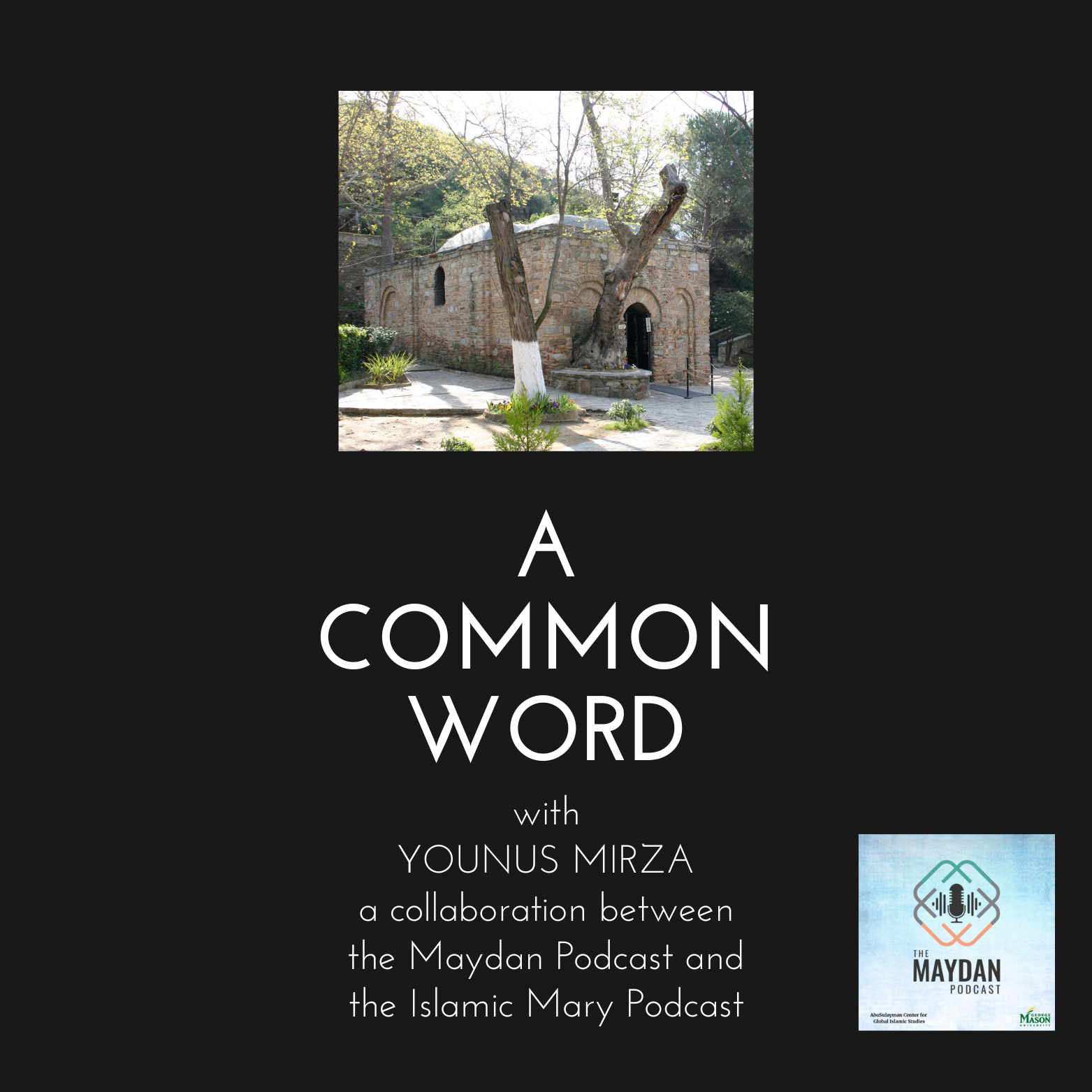
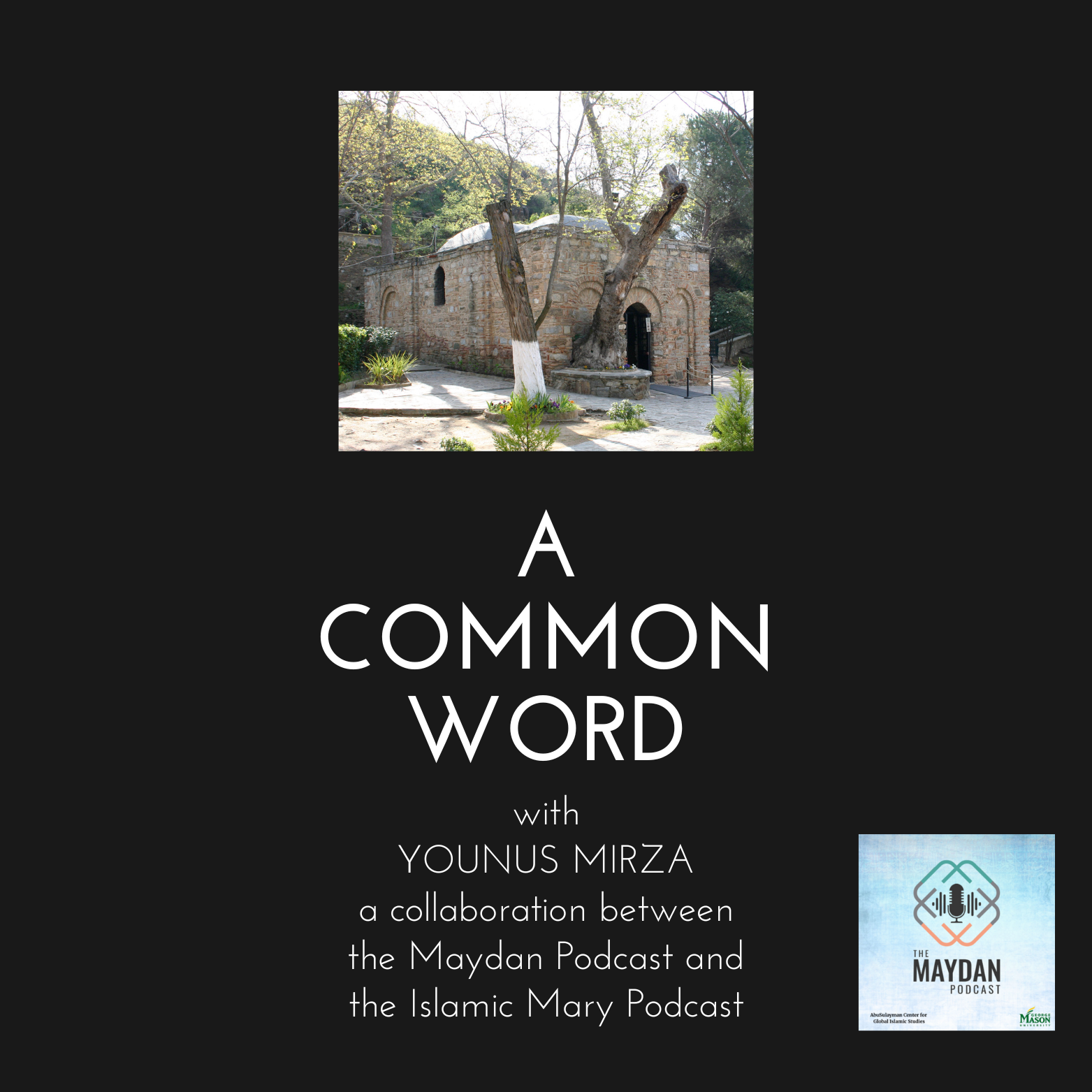
[00:26:20] Speaker A: One of the things I find interesting in that part of your article was it sounds like it's not only in the west or in the United States where Muslims are naming their mosques after Mary to start some interreligious dialogue, but even in the Middle east, where it's predominantly Muslim, that the name of Mary is being invoked. And then could you speak about the. The house, the Virgin house of Mary in Turkey? So this was something also new that I saw in your book and you talk about in the article.
Hopefully, I have a dream of visiting there and maybe blogging and podcasting about it. But this has also been a shared site of Christians and Muslims, and it has certain Christian origins, but Muslims have appropriated it in some ways. So. Yeah, please.
[00:27:03] Speaker B: Yeah. So it's. It's interesting because it's relatively new compared to other shared shrines.
So it's 1950s is really when it. When Muslims kind of started promoting it even though Christians found the House of Mary in the, at the turn of the century. But there's, I'm just going to say there's other shared shrines that are much, much older. Like Our lady of Sid Naya in Syria has.
You know, first of all, the monastery and church were founded I believe in the 6th century, so very old. But we have medieval accounts of Christians, Muslims and Jews going to that shrine and seeking the healing oil. And we, you know, we actually like images and such of that. So that one's really, really old.
But the House of Mary in Turkey is important because like I said, because Muslims have sort of taken it on as an interfaith symbol and really the secular government of turkey in the 50s sort of made it their baby and have promoted it, you know, in tour packages and whatever to get people to come. But also Miriam Anna Evi is important because it is explicitly named by some of those bishops at Vatican ii. So it really is one of the inspirations for that line in Nostra Aetate 3.
And then it has separate, the shrine itself has separate spaces or more of a Christian place that by the way, many popes have visited and then a more Muslim place that doesn't have images and whatever. So it's really literally popular as in like many, many people go there. I don't know the exact numbers, but many, many people have have visited, including popes, et cetera. So definitely if you're going to visit one of the many Yunus, that would be, should be on the top of your list.
[00:28:52] Speaker A: Okay. And in my research on the Slavic Mary, I saw that even some popes have spoken from Turkey or the House to talk about bridge building and peace in the Middle East. So it's become a symbol of inter religious dialogue. So what would you say are some of your key conclusions, whether that's from the book or from the article?
And then how do they advance Christian Muslim dialogue and relations?
[00:29:16] Speaker B: Yeah, I would say that attention to these shared sites are part of the comparative theology's sort of ritual turn.
And for me they advance Christian Muslim relations because they take us beyond experts like you and me. Talking, you know, dialogue is about talking. It's a lot of talking. It's at the high level, it's elite, which is great, that stuff trickles down. But I think that shared shrines at the grassroots level has, you know, has the potential for the trickle up effect. Right. So dialogue is really integrated and diffused into all of our lives because if it's really going to have an effect in this world in terms of peace and understanding and respect. It can't just be the pope and the imam, you know, talking, or even scholars like us talking. It has to be our students taking this out into the world and what Catholics call the dialogue of life. And so I think that one key locus of the dialogue of life is these sacred spaces that we share. Of course, we have to share them carefully. We have to be intentional about it.
We don't want to be synchronistic about it. We also want to respect people when they don't want to do interreligious dialogue in these places, that sometimes, you know, there were some Muslim Christians in the Middle east who were saying, well, that's not our. That's their Mary. That's not our Mary. And we're feeling protective over their sights. And so I think we need to respect that, too, that sometimes we want our spaces for ourselves. But can these shared. Some of these shared shrines do both, potentially, if we're intentional? I think so. So they give me a lot of hope for the future, actually.
[00:31:03] Speaker A: And that's what I really loved about the article in the book is that sometimes even Islamic studies and thinking about Islamic law, there are a lot of critiques of shrines and shrine worship, but they do represent a more populous understanding of the faith and a grassroots. So whether it's billboards or mosque or the house of the Virgin Mary, you do hear the sentiments of the common and everyday person. So I really appreciate you highlighting that.
So thanks so much, Rita, for joining the podcast, and I look forward to being in touch.
[00:31:38] Speaker B: Thanks, Eunice. I appreciate being here.